

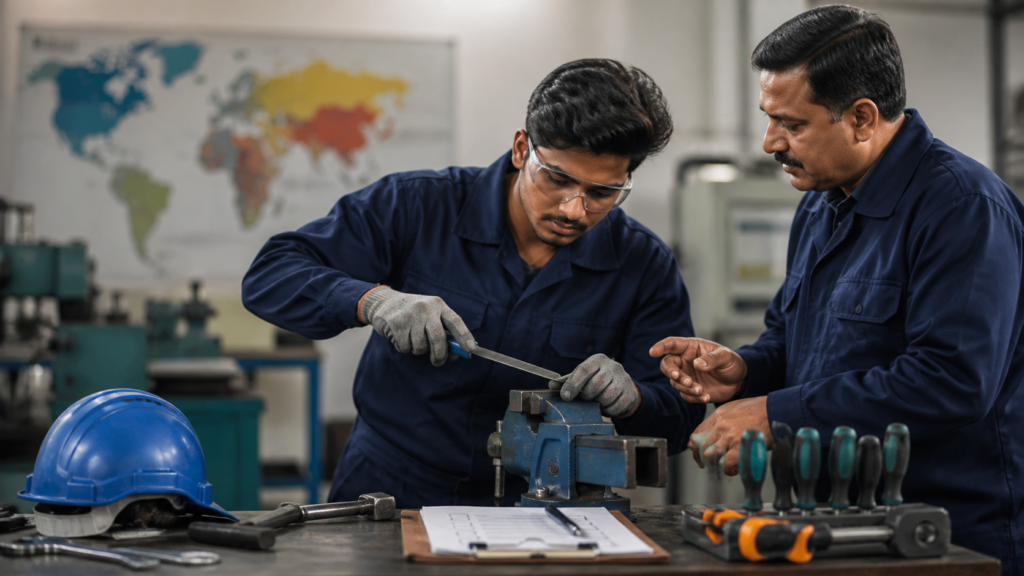
Dos and Don’ts for Trade Test Preparation for Overseas Jobs is a practical Kovon guide for Indian candidates who want international work without walking into avoidable risk. The topic is preparing for trade tests for overseas jobs, but the bigger lesson is discipline: verify the process, understand the role, keep documents clean, and make decisions based on written facts.
This article is written for welders, electricians, plumbers, drivers, machine operators, housekeeping staff, cooks, caregivers and other skilled candidates. A trade test is often the bridge between interest and selection. It shows whether your practical skill, safety discipline and work speed match the employer’s international standard. Many overseas job problems begin before travel, when candidates rush because a vacancy sounds urgent. A safe candidate slows down enough to ask the right questions, compare the package and keep proof of every important step.
Why this matters before applying
Blue-collar, grey-collar, hospitality and healthcare-support jobs can improve family income, but only when the candidate understands the full pathway. A job offer is not just a salary number. It includes employer credibility, visa category, medical fitness, accommodation, food, transport, working hours, overtime, deductions, language needs and first-month adjustment.
Kovon’s perspective is candidate-first: do not apply everywhere blindly. Apply where your skill, health, documents and family plan match the opportunity. A clean profile, honest assessment and verified recruitment channel are worth more than ten random forwarded job posters.
Dos to follow
- Review the exact trade test format before attending: tools, time limit, safety checks and expected output.
- Practise the basic tasks of your trade instead of memorising only interview answers.
- Carry your certificates, experience proof and identity documents in a neat file.
- Use assessment practice at Kovon’s testing platform to understand your readiness.
- Arrive early, follow safety instructions and ask if you do not understand a test instruction.
Don’ts to avoid
- Do not exaggerate skills you cannot demonstrate in a practical test.
- Do not ignore PPE, tool handling or housekeeping during the test.
- Do not attend without understanding whether the job is for helper, semi-skilled or skilled level.
- Do not copy someone else’s documents or certificates.
- Do not treat a failed test as the end; use the result to train and reapply.
How to apply this in real life
Before moving forward, write the role, country, employer name, salary, accommodation terms, food support, transport, contract period and process cost on one page. If any point is unclear, ask before paying, resigning, travelling or handing over original documents. Keep screenshots and receipts in a separate folder. Share the plan with one trusted family member so someone else can help you notice mismatches.
If the topic involves interviews or trade tests, practise with real examples instead of memorised lines. If it involves documents, compare spelling and dates across passport, certificates and offer letter. If it involves money, calculate savings after living costs. If it involves safety, report concerns early and use official channels.
Kovon next step
Use the Kovon job search app to explore structured overseas opportunities, practise readiness through Kovon assessment tests, and use the Kovon Partner Portal app if you are a training, mobilisation or counselling partner supporting candidates.
The right overseas move should feel clear before departure and manageable after arrival. When in doubt, pause, verify and choose the route that protects your documents, dignity and long-term career.